

The shadow that started it all
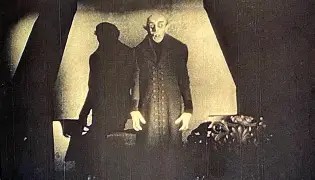
Before velvet capes and romantic sighs, there was Count Orlock. F. W. Murnau’s Nosferatu is the original vampire – a silent expressionist nightmare that turned shadow into story and fear into architecture. Released in 1922 and nearly lost to copyright battles, the film survives as a haunting relic of early horror, dripping with atmosphere and mythic unease.
This isn’t Dracula with dialogue. It’s dread in it’s pure form. A cinematic whisper from the coffin.
Why it Still Haunts

Count Orlock Is Pure Nightmare
Played by Max Schreck (whose name literally means “fright”), Orlock isn’t seductive, he’s skeletal, rodent-like and visuallyy grotesque. His elongated fingers. hunched posture and blank stare became the blueprint for cinematic monstrosity.
Expression as Emotional Language
The film’s visual style-twisted shadows, distorted architecture and stark lighting – was part of the German Expressionist movement. It wasn’t just aesthetic. It was emotional coding. Fear, isolation and death were built into the frame.
It Was Almost Erased
Nosferatu was an unauthorised adaptation of Bram Stoker’s Dracula. After a lawsuit from Stoker’s estate, all copies were ordered to be destroyed. Thankfully, a few prints survived, and the film has become a cornerstone of horror history.
The Shadow Scene Is Iconic
Orlock’s shadow creeping up the staircase is one of the most enduring images in cinema. It isn’t scary, but symbolic. The vampire becomes pure absence, metaphor and myth.
Silence Amplifies the Horror
Without dialogue, the film relies on gestures, pacing and visual rhythm. The silence isn’t empty, it’s oppressive. Every frame feels melancholic.
Style Cues
- Textures: Grain, fog, wood, candle wax.
- Palette: Black, ivory, shadow grey.
- Motifs: Windows, staircases, coffins, silhouettes.
- Framing Techniques: Negative space, high contrast, slow pans through shadow.

Nosferatu is more than a film – It’s a cinematic relic. A whisper from the silent era that still echoes through horror, mythology and visual storytelling.
Let’s lean into shadow, silence and the mythic language of fear.
 Ronin Cinema