

Silence, Survival and the Sound of Memory

Roman Polanski’s The Pianist isn’t just a war film – it’s a cinematic elegy. Based on the memoir of Władysław Szpilman, a Polish-Jewish pianist who survived the holocaust. The film unfolds with quiet devastation. There are no grand speeches, no sweeping scores of triumph, just a man, a piano and the slow erosion of everything familiar.
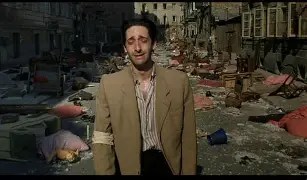
Adrien Brody’s performance is skeletal and haunting, mirroring the film’s stripped down aesthetic. As Warsaw crumbles, Szpilman drifts through the ruins – hiding, listening, remembering. Music became his lifeline, his language, his last letter to humanity.
Why it Still Resonates
Music as Survival
Szpilman’s piano playing isn’t just art – it’s resistance. In one of the film’s most haunting scenes, he performs Chopin for a German officer. It’s not a concert, it’s a confession.
Architecture of Absence
The film’s visual language is built from empty rooms, broken windows. and hollowed out sheets. Every frame feels like a memory-faded, fragile and echoing.
Adrien Brody’s Transformation
Brody lost over 30 pounds, and gave up his personal possessions to prepare for the role. He physically became part of the narrative, his body revealing a map of trauma.
Polanski’s Personal Connection
Roman Polanski himself escaped the Krakow ghetto as a child. His direction is restrained, intimate and deeply personal – avoiding spectacle in favour of emotional truth.
Style Cues
- Textures: Dust, cracked wood, sheet music, candle wax.
- Palette: Sepia, ash grey, muted ivory.
- Motifs: Pianos, windows, coats, silence.
- Framing Techniques: Wide shots of emptiness, close-ups of hands, slow pans through ruins.
The Pianist is a film of restraint. It doesn’t dramatise – it remembers. Through music, silence and emotional stillness, it honours a story of survival without spectacle.
Let this film lead you into quiet power, historical gravity and the cinematic language of memory.
 Ronin Cinema