

Look Back (2024) Kiyotaka Oshiyama
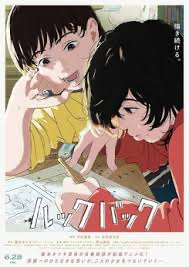
I was watching another YouTube video, enabling another creative to make some coin, and as I sat there daydreaming about all of the creative projects that I have in mind, they all seem to be in limbo because I’m constantly “looking” for inspiration instead of unleashing what I already have inside of me. I digress! The video that I was watching, I believe, was titled ‘Why Do We Create Art?’ (I’m sorry that I didn’t note your handle to credit you). The host of the video essay proceeded to discuss the film Look Back as a love letter to creativity, I was intrigued, and so I watched it.
It is an anime based on a one-shot manga by Tatsuki Fukimoto. A coming of age drama of two girls in Japan. It tells the story of Fujino, an outgoing, overly confident girl that has her manga published in the school newspaper, and Kyomoto, a shut in, whose artistic ability becomes the catalyst of their friendship. That’s that in a nutshell, but I felt compelled to take a deep dive, not really, just dip my toe in the water and see how I feel.
Fujino and Kyomoto draw Yonkama, a four cell manga where the story flows downwards, a comic strip format that usually contains gag comic strips. Traditionally, yonkoma follows a structure known as ‘kishotenketsu’:
Ki – The first panel sets the scene.
Sho – The second panel develops the foundation laid down in the first panel.
Ten – The third panel is the climax in which an unforeseen development occurs.
Ketsu – The fourth panel is the conclusion, in which the effects of the third panel can be seen.
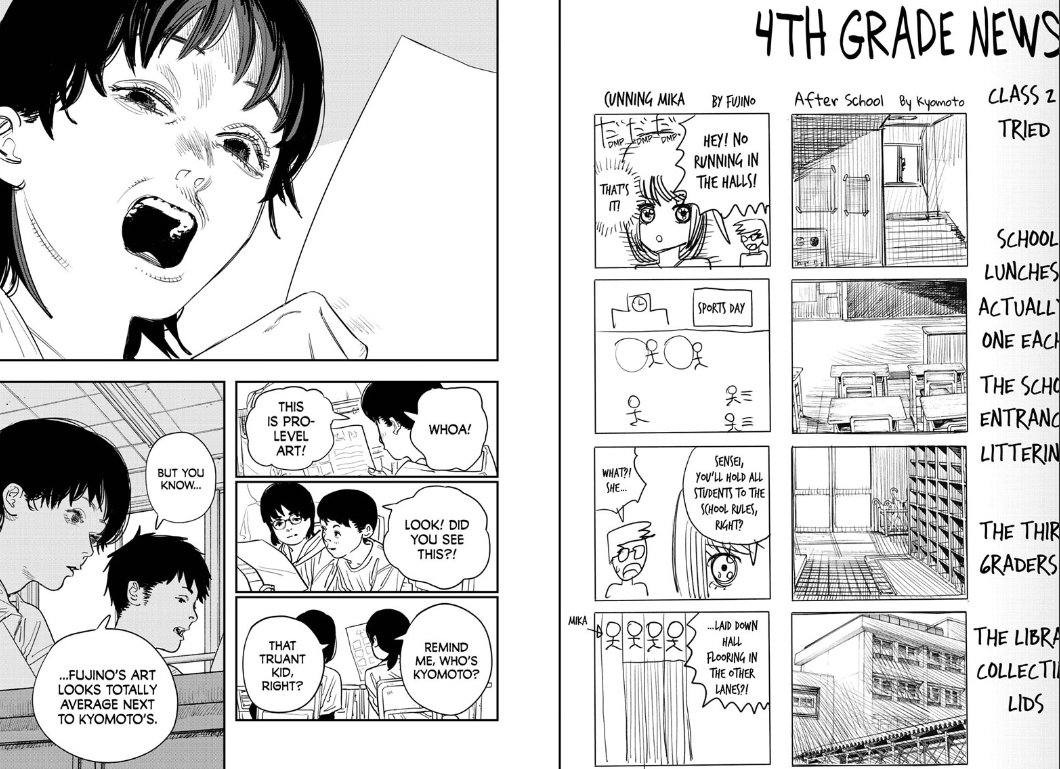
I noticed that the film has four components like a yonkoma: I have termed them as; Elementary School, Middle School, High School and Young Adulthood, and Beyond.
Elementary School
Fujino is a local talent, she is known for drawing manga. Her manga gets published in her school newspaper, and is outwardly delighted that her peers and teachers love her work. She comes across as very shallow and entitled as she hasn’t been challenged.
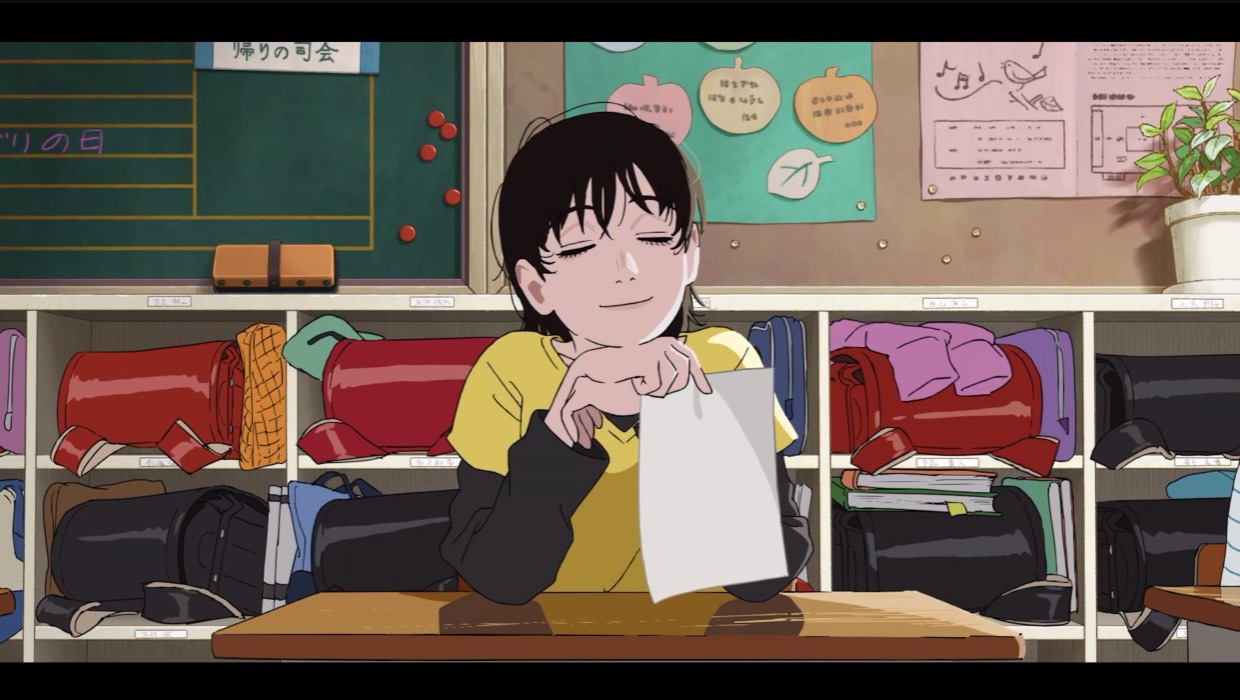
One day, a teacher asks Fujino to give one of her slips to Kyomoto, a shut-in who has social anxiety bad enough to prevent her from going to school. She also draws manga, and is very proficient at background illustration.
When Fujino sees Kyomoto’s artwork, she becomes envious as she hasn’t met anyone that has surpassed her skills before and throws herself into her art like she was possessed, determined to best Kyomoto’s work, all the while alienating everyone around her. Over the course of a year, Fujino recognises that she will not eclipse Kyomoto’s talent and quits drawing, and pursues age related activities.
Middle School
As Fujino’s class graduate Middle School, Fujino is tasked with delivering Kyomoto’s diploma to her. As she approaches the door to Kyomoto’s room she sees several piles of used sketchbooks piled high in the corridor showing how much she has practiced her craft. Feeling the envy rise in her again, she notices an empty strip on the floor. She quickly draws a crude yonkoma mocking Kyomoto’s debilitating condition, a gust of wind manages to alleviate the slip from Fujino’s hand and slide under the door. She immediately regrets her actions and leaves.
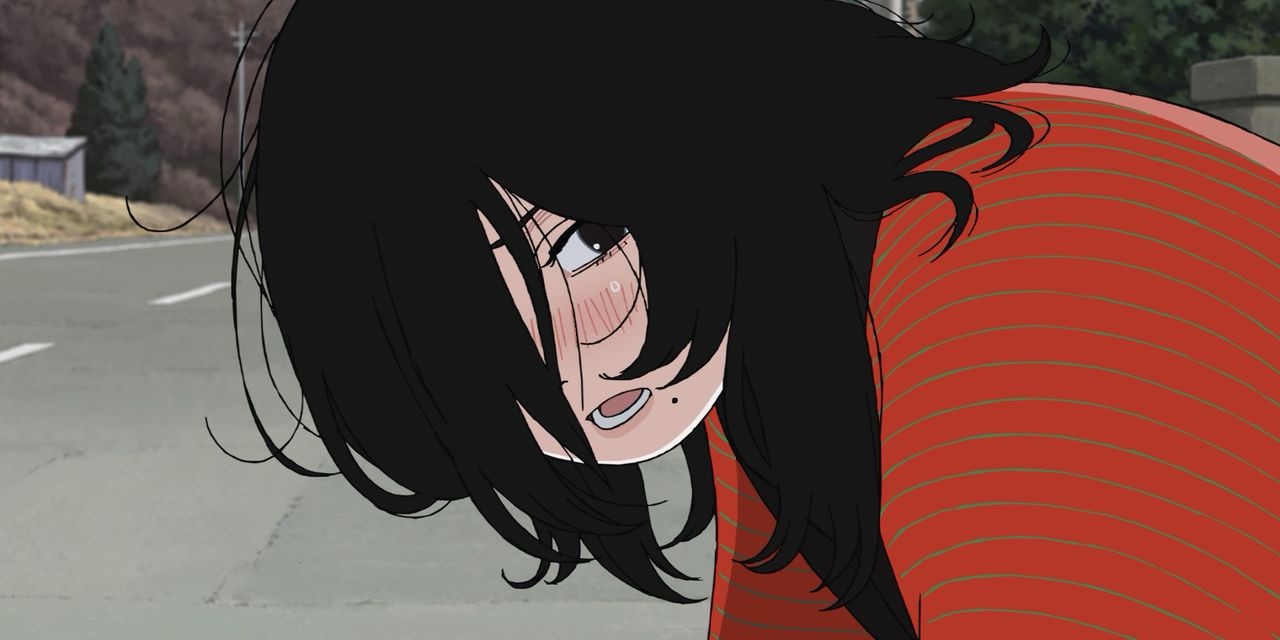
Kyomoto notices the strip and recognises the art straight away, without hesitation, she runs out to find Fujino to finally meet her.
It turns out that Kyomoto is Fujino’s biggest fan and is very excited to meet her. After their awkward discussion, Kyomoto asks why Fujino stopped drawing manga, in response, and to avoid admitting the truth, she lies and diverts the conversation by saying that she is going to enter a manga contest and excuses herself.
It is here that we can feel all of the emotions that Fujino does as she stomps then skips then stomps again through the rain, all the way home. Her creativity has become unlocked. She begins to draw again, and further along she invites Kyomoto to contribute to the ensuing manga.
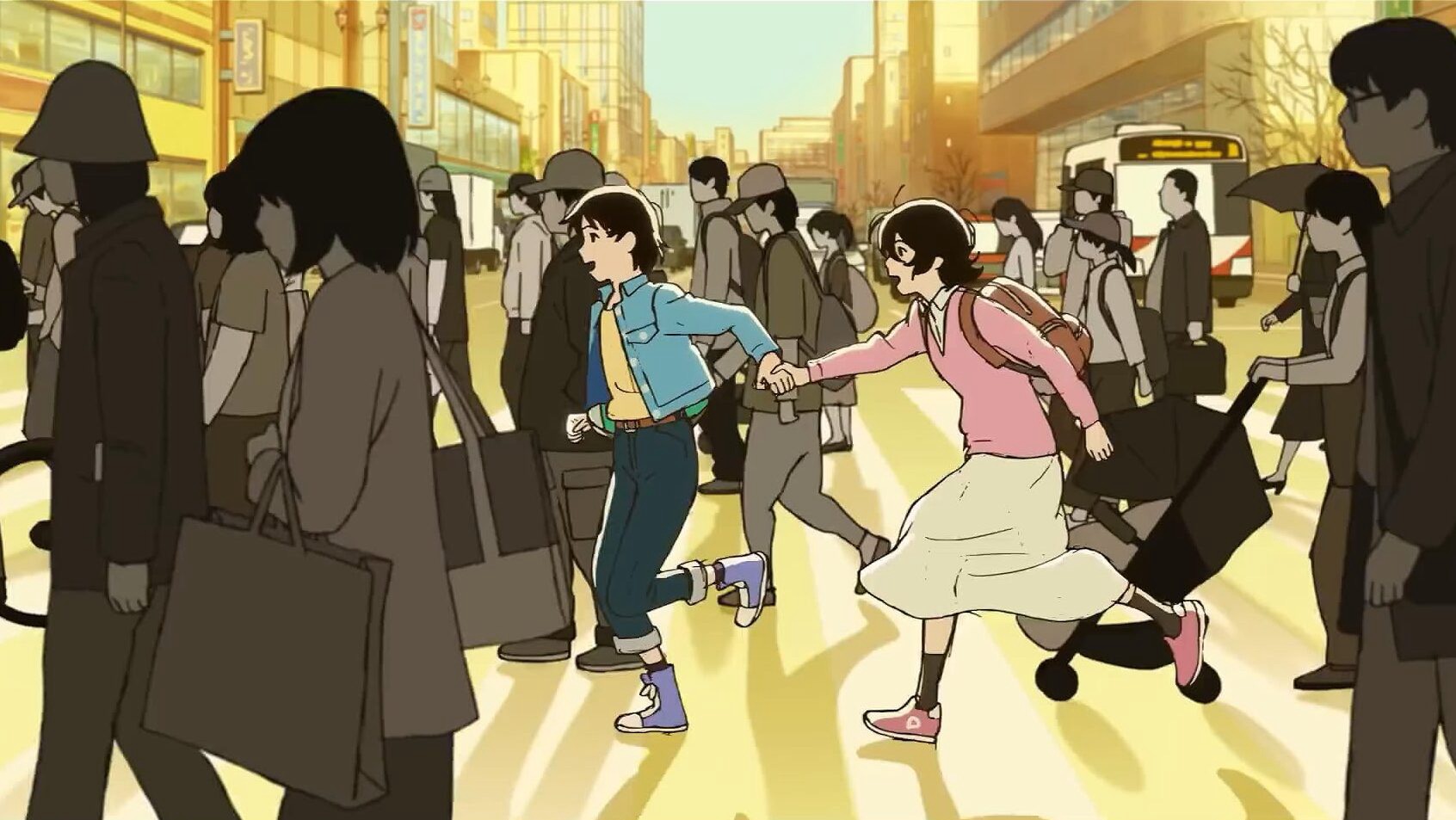
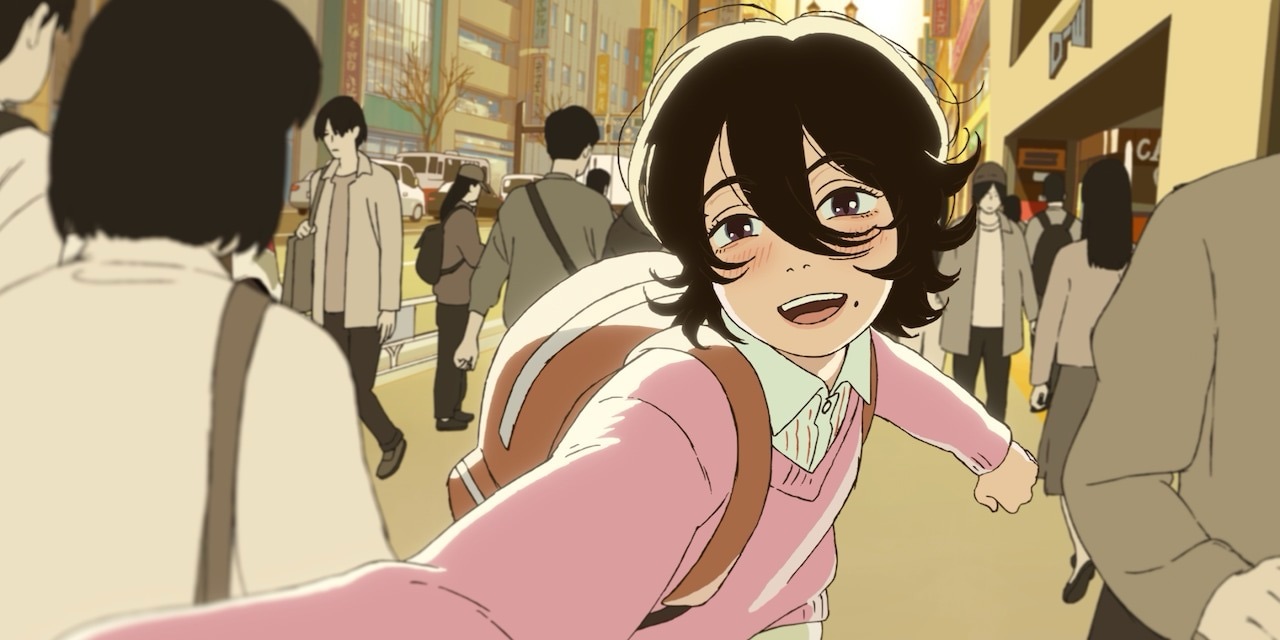
They win! And along the way they have become firm friends. Fujino uses some of her winnings to take Kyomoto into town for a treat, which Kyomoto is very grateful for the motivation to leave her house. It is here that the hand holding motifs begin, with Fujino leading the way and Kyomoto clinging on behind.
High School and Young Adulthood
Fujino and Kyomoto continue creating one-shot manga, and are still recipients of much praise for their work. After their High School graduation, they are offered the opportunity to create a manga serialisation, which delights Fujino, but Kyomoto not so much. Why? Because she wants to pursue a formal art education, much to Fujino’s chagrin who handles the bombshell badly and is quite critical of Kyomoto for even thinking such a thing. Just before Kyomoto shares her plans, she lets go of Fujino’s hand, for the first and the last time.
Fujino has settled into creating “Shark Kick”, her manga serialisation. It has become so popular that there are now eleven tankobon (volumes) and an anime adaptation. However, Fujino is feeling dissatisfied without Kyomoto’s assistance and is ploughing through many assistants as a result.
Meanwhile, a man enters Tohoku University of Art and Design with a pick axe, convinced that his work has been plagiarised, and decided that any art student in his way will become a recipient of his wrath. He kills a lot of students, including Kyomoto.
Beyond
Fujino is devastated and puts Shark Kick on hold while she returns to her hometown for the funeral. She goes to Kyomoto’s house alone to grieve.
As she walks to the door, passing the used sketchbook piles, she freezes and breaks down and convinces herself that she killed Kyomoto by enabling her to live her dream.
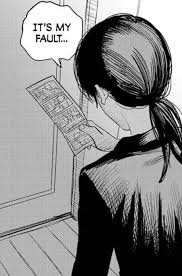
She finds and tears up the cruel and mocking yonkoma from all those years ago. A scrap of it slips under the door, like all those years ago.
That scrap of yonkoma with the text ‘Don’t go out’ forms a daydream, an alternate reality…
Kyomoto doesn’t pay any attention to the note and carries on drawing. Because of this, she never meets Fujino and regardless of this still develops a passion for art and attends Tohoku University.
When the killer arrives on campus, daydream Fujino leaps in from out of nowhere and incapacitates him thwarting his murderous rampage.
As Fujino is being transported to the ambulance, the two meet, and it has similarities to the real first meeting.
When Kyomoto returns home, she draws a yonkoma reflecting the events and names it look back…
So what is it about the innate desire to be in a relationship with whatever medium we are attracted to?
A gust of wind blows the strip outside of the door at Fujino’s feet and gets her attention. Fujino enters the bedroom, and is met with the tankobon and merchandise of Shark Kick, as well as reader surveys waiting to be completed to show support.
In spite of them going their separate ways, Kyomoto remained an ardent fan and supported Fujino from afar.
Still feeling disconnected with her life choices and complaining that she hates drawing, she hears Kyomoto’s voice asking her ‘Then, why do you draw Fujino?’ She recollects all the times her manga made Kyomoto dizzy with delight.
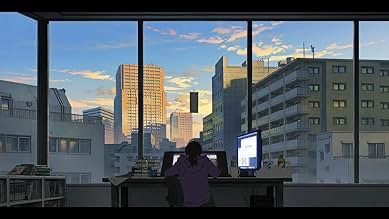
And so Fujino decides to continue drawing and has Kyomoto’s yonkoma taped above her work station.
I was left open-mouthed watching the final frame, it was almost the same as the opening frame, with Fujino drawing at her desk with her left leg rhythmically jerking as she works. She now draws with a purpose. That is why Fujino draws.
I found this film to be inspirational and yet tragic, a beautiful visual meditation of the human desire to create and to collaborate.
I saw that Robbie Collins of the Telegraph rated this ffilm five stars, and in his conclusion he muses ” There’s a haiku purity to it. Look Back is as neat and yet also as overflowing as the four panel strips in which it’s leads once diligently honed their craft. And if something so beautiful also feels too brief – well that may be the idea”.
Is it for you? Is it for them? Or is it because it just is?
 Ronin Cinema